Smarter Than the Machine? What AI Betting Tools Actually Deliver — and Where They Fall Apart

Photo: Robert Markowitz, Public domain, via Wikimedia Commons
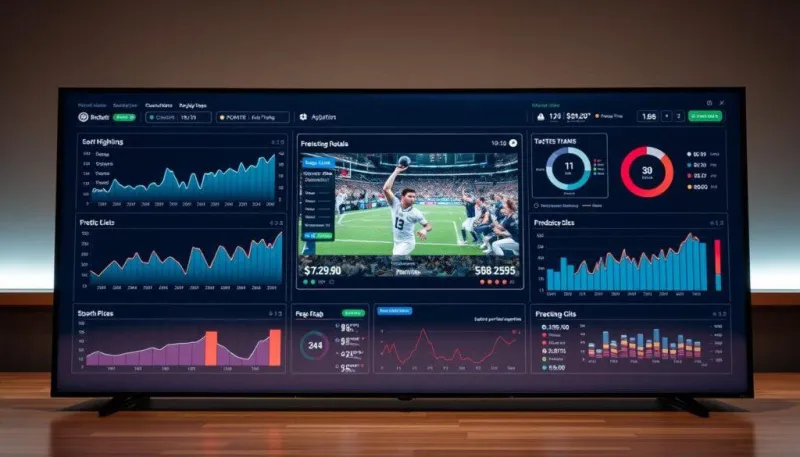
There's a new kind of bettor showing up in sports betting circles these days. They've got a subscription to an AI prediction service, a dashboard full of color-coded confidence ratings, and a firm belief that some algorithm in the cloud has already done the hard work for them. They're betting with confidence. They're also, in a lot of cases, quietly losing money.
That's not a knock on technology. AI tools have genuinely changed how sharp bettors process information — injury reports, weather data, historical matchups, line movement, public betting percentages. The sheer volume of inputs these systems can crunch in seconds would take a human analyst hours. That part is real, and it matters.
But here's what the marketing page for your favorite AI betting assistant won't tell you: processing information faster isn't the same as processing it better. And the gap between those two things is exactly where a lot of bettors are leaving money on the table — or worse, handing it over.
The Subscription Math Nobody Wants to Do
Let's start with something basic: the cost of entry. AI betting tools and automated prediction platforms typically run anywhere from $30 to $200 a month, with some premium services pushing past $500 for "professional" tiers. Over a full NFL season — roughly five months of serious action — that's potentially $1,000 or more just to access picks you still have to evaluate, time, and execute yourself.
For that spend to make sense, these tools need to deliver a meaningful edge on top of what you'd generate on your own. And here's where the performance data gets murky. Most AI betting services publish their win rates prominently — "67% accuracy!" sounds incredible until you understand that in sports betting, hitting 55% against the spread is considered genuinely sharp. Anything above 60% sustained over a full season is exceptional. So when a service claims 67%, the first question isn't "wow, really?" It's "against what lines, over how many picks, and who verified it?"
Third-party tracking sites like Covers and Pregame have documented the public records of dozens of these services, and the picture is rarely as clean as the sales page suggests. Cherry-picked time windows, selective sport coverage, and unaudited records are common. That doesn't mean every tool is a scam — but it does mean you need to approach performance claims the same way you'd approach a betting line: with skepticism and an eye for what's being hidden.
What Algorithms Actually Do Well
To be fair, there are legitimate use cases where AI tools genuinely sharpen a bettor's edge — and dismissing them entirely would be its own kind of mistake.
Line movement analysis is probably the strongest one. Algorithms can track real-time odds changes across dozens of sportsbooks simultaneously and flag when sharp money is moving a line in ways that suggest professional action. Spotting a line move from -3 to -4.5 in two hours before a Sunday game is exactly the kind of signal that takes time to catch manually. A good tool surfaces it instantly.
Injury impact modeling is another area where the machines have a genuine advantage. Factoring in how a starting center's absence affects a team's offensive efficiency rating, adjusted for opponent defensive scheme and pace of play, is the kind of multi-variable calculation that benefits from computing power. A sharp bettor can do this work — but an AI can do it faster and across more games simultaneously.
Historical pattern recognition also holds up, particularly in sports like the NFL and NBA where sample sizes are large enough to be statistically meaningful. Certain situational trends — teams coming off a short week, home underdogs in divisional matchups, road favorites in playoff elimination games — show up consistently enough that algorithmic flagging adds real value.
The problem isn't that AI tools can't do these things. The problem is that they're often sold as complete betting solutions rather than what they actually are: research accelerators.
The False Confidence Problem
Here's the psychological trap that catches even experienced bettors. When an algorithm spits out a pick with an 82% confidence rating, something changes in how your brain processes risk. That number feels like certainty. It feels like permission. And that feeling — not the algorithm itself — is often what does the damage.
Behavioral economists call this automation bias: the tendency to over-trust automated outputs and under-trust your own judgment, even when you have relevant information the system doesn't. In betting, that information gap is significant. You know things an algorithm doesn't — that a key player looked slow in warmups, that a coach has historically struggled in prime-time spots, that a team's locker room chemistry has been noticeably off based on recent press conferences. None of that is in the dataset.
Some of the sharpest bettors working today describe their relationship with AI tools the way a good chef describes a high-end kitchen appliance: useful for specific tasks, but you still need to know how to cook. They pull algorithmic insights as one input among several, weight them against their own research, and override the machine when their read on a situation conflicts with the confidence score. That discipline — knowing when to trust the algorithm and when to trust yourself — is what separates bettors who use these tools profitably from those who just outsource their judgment and wonder why their bankroll keeps shrinking.
What the Machines Can't See
Sports, at their core, involve human beings under pressure. And human beings do unpredictable things — especially when the stakes are high, the crowd is loud, and the moment is bigger than any data point in the training set.
No algorithm predicted that a backup quarterback would play the game of his life in a playoff spot. No model fully accounts for a team that's been publicly disrespected all week and comes out with something to prove. No confidence rating captures the weight of a veteran player in his final season making a decision that defies every statistical tendency he's shown across a fifteen-year career.
These aren't edge cases. They're the fabric of sports. And they're exactly why the bettors who consistently win over time aren't the ones who found the best algorithm — they're the ones who learned to use algorithms as a tool without mistaking them for an answer.
The Bottom Line
If you're paying for an AI betting tool, audit it the same way you'd audit your own record. Track every pick, note where the algorithm was right and wrong, and look for patterns in its failures. If it's consistently missing on certain teams, certain bet types, or certain situational spots, that's information. Use it.
If you're thinking about subscribing to one, start with the free tier if there is one, and stress-test the picks against real lines for a month before you put money behind them. The tool should be earning its subscription cost in demonstrable edge — not just in a feeling of confidence.
And if you're already deep into algorithmic betting and wondering why the results haven't matched the promise, here's the most useful thing you can do: log off the dashboard for a week and make picks the old-fashioned way. You might be surprised what you've forgotten how to see.