Hot Streak, Cold Logic: Why Your Best Run at the Books Could Be Setting You Up to Fail
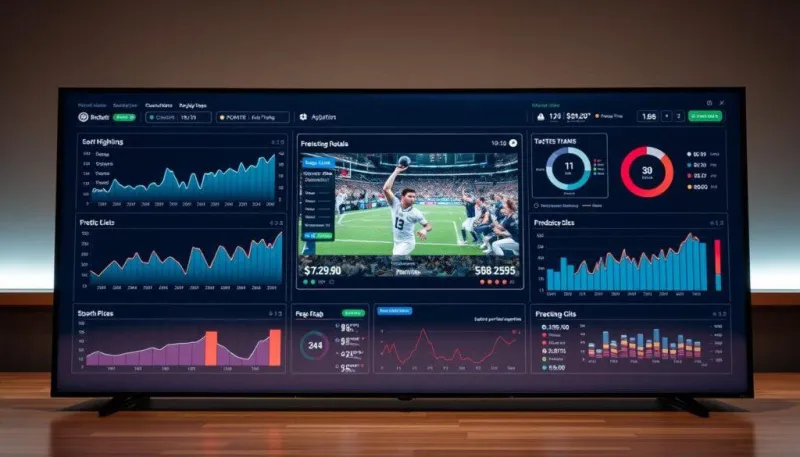
Photo: sports bettor analyzing data charts with money on table, via sharp-9.com
Let's paint a picture you probably recognize. You go 18-7 over three weeks. Your bankroll is up 40%. Every read feels right, every line looks soft, and suddenly you're eyeing bigger units because — hey — clearly you've figured something out. The picks are clicking. The research is paying off. You're in the zone.
Then October hits, and you drop 60% of those gains in two weekends.
What happened? You didn't get dumber. The games didn't get harder. What happened is that variance — the invisible hand that shapes every outcome in sports betting — gave you a gift, let you mistake it for skill, and then quietly took everything back with interest.
This is the variance trap. And it catches sharp bettors just as often as casual ones.
What Variance Actually Means (And Why It's Sneakier Than You Think)
In betting, variance refers to the natural fluctuation of outcomes around your true expected value. Even if you have a genuine edge — say, you're hitting 54% of your spread bets against a 52.4% break-even threshold — you will still go through stretches where you run well above or well below that number. Not because your edge changed, but because that's just how probability works over small sample sizes.
The problem is that the human brain is spectacularly bad at accepting randomness. We are pattern-recognition machines. When we win eight straight, we don't think "variance is favorable right now." We think "I've been doing something right." And when we lose eight straight, we don't think "variance is unfavorable." We think "something is broken."
Both reactions can lead to decisions that actively hurt your long-term results.
The Winning Streak Trap: When Good Luck Teaches Bad Lessons
Here's the specific danger of a hot streak: it creates false confirmation. Every questionable decision you made during that run gets retroactively validated by the outcome. You bet a five-teamer on a gut feeling? It hit, so now parlays feel smarter. You sized up on a game you barely researched? It cashed, so now you trust instinct over process.
This is outcome bias working against you. You're judging the quality of your decisions by the results rather than by the reasoning behind them. A bad process that produces a good outcome is still a bad process — and it's going to punish you eventually.
Take a real-world scenario. Say you're betting NFL sides and you go 12-4 in September. Feels incredible. But when you break down those 12 wins, five of them came down to fourth-quarter turnovers that easily could have gone the other way. Three more were games where you caught a key injury update just before kickoff that moved the line in your favor — a timing edge that won't always be there. Your actual research-driven edges? Maybe four of those twelve wins.
You didn't hit 75% because your model is elite. You hit 75% because September was kind to you. But your brain doesn't want to hear that.
The Bet-Size Spiral
The most financially damaging thing a hot streak does is justify reckless unit inflation. You started the month betting $50 a game. By week three, you're at $150 because your bankroll grew and your confidence grew with it. This feels rational — you're scaling to your new roll, right?
Except here's what you've actually done: you've increased your exposure at the exact moment your variance is most likely to regress. Winning streaks pull your results above your true win rate. Regression to the mean is coming. And when it does, it's hitting your inflated bet sizes.
This is how bettors who had a great month end up worse off by the end of the quarter than if they'd stayed flat. The downswing hits harder because they scaled up at the peak.
A simple rule worth tattooing somewhere: never adjust your unit size based on a single month of results. Bankroll management decisions should be based on long-run performance over hundreds of bets, not a three-week heater.
Metrics That Actually Tell You Something
Profit is a lagging indicator. It tells you what happened, not why. If you want to know whether your edge is real, you need to dig into the metrics that strip variance out of the equation.
Closing Line Value (CLV): Are you consistently beating the closing price? If you're betting a side at -3 and it closes at -4.5, that's positive CLV — a sign your reads are sharp. If you're losing games but showing positive CLV, your process is sound and variance is the culprit. If you're winning games but showing negative CLV, enjoy it while it lasts.
Sample Size: Fifty bets means almost nothing statistically. A hundred bets gives you a rough signal. Three hundred bets starts to tell a story. Don't evaluate your system on a month. Evaluate it on a season — preferably multiple seasons.
Decision Quality Scores: This one requires honest self-assessment. After each bet, rate the quality of your research and reasoning on a simple scale, independent of the outcome. Over time, do your high-quality decisions produce better results than your low-quality ones? They should. If they don't, your criteria for quality need work.
ROI by Bet Type: Break down your results by category — spreads, totals, moneylines, props, futures. Are you actually good across the board, or are you carrying one category that's running hot while the rest bleeds?
How to Stay Grounded When You're Running Good
The goal isn't to suppress excitement when things are going well. That's not realistic, and honestly, enjoying a good run is part of what makes this fun. The goal is to maintain process discipline even when the results are flattering.
A few habits that help:
- Keep a bet journal. Log not just outcomes but your reasoning for every play. When you look back at a winning streak, the journal keeps you honest about which wins were earned and which were gifted.
- Set a review cadence, not a reaction cadence. Evaluate your system on a fixed schedule — monthly, quarterly — rather than reacting to every hot or cold stretch.
- Talk to someone who will push back. A betting group, a sharp friend, a Discord community — find people who will challenge your reads rather than just celebrate your wins.
- Treat your best month as a question, not an answer. Instead of thinking "I figured it out," ask "what would I need to see over the next 200 bets to confirm this is real?"
The Bottom Line
Variance doesn't care how good you are. It will give you great months when you're playing sloppy and rough months when you're playing sharp. The bettors who build long-term results are the ones who refuse to let either experience rewrite their process.
Your best month might feel like graduation. But until the sample size backs it up, treat it like a pop quiz you got lucky on. Stay grounded, track what matters, and let the edge — not the streak — do the talking.