Fourth Quarter Money: How Sharp Bettors Turn Late-Game Chaos Into Consistent Profits
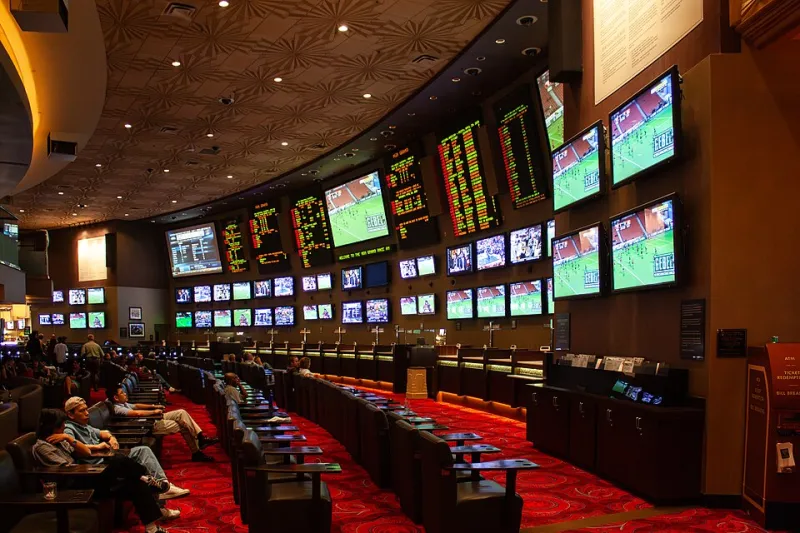
Photo: Chad Davis, CC BY 2.0, via Wikimedia Commons
By the time the fourth quarter rolls around, casual bettors are either celebrating or doom-scrolling. Sharp bettors are just getting started.
Late-game sports betting is one of the most underexplored edges in the US market, partly because it requires real-time attention and partly because most bettors are too emotionally invested in their pre-game tickets to think clearly about new opportunities. That emotional blind spot? It's exactly where the value hides.
This guide is about finding it.
Why Late-Game Odds Get Soft
Here's a fundamental truth about live betting markets: they move fast, but they don't always move accurately. Sportsbook algorithms reprice lines in real time based on score, time remaining, possession, and historical game data. They're good — but they're not perfect, and they're especially vulnerable in the final quarter when small variables can swing outcomes dramatically.
Two things create exploitable gaps. First, the algorithms are largely backward-looking. They weight recent in-game momentum, but they can underweight things like a team's historical performance in clutch situations, a specific coach's late-game tendencies, or a star player's foul trouble. Second, live betting handles spike in the fourth quarter as casual bettors react emotionally to what they're watching. That surge of recreational money can briefly distort lines in ways that sharp bettors recognize and attack.
The window is usually narrow — sometimes just a few minutes before the book adjusts. But if you know what you're looking for, it's enough.
NFL: Where the Patterns Are Loudest
Professional football is the richest environment for fourth-quarter live betting in the US, and the data backs that up. A multi-season review of NFL fourth-quarter performance shows that certain teams consistently cover the spread in the final period at rates well above 50% — while others reliably fade when the game is on the line.
A few patterns worth tracking:
Clock management tendencies by coaching staff. Teams with run-first coaches in the fourth quarter tend to drain clock and keep games closer than the live spread suggests when they're leading. Live unders in these situations — especially when a run-heavy team has a 7-to-10 point lead entering the fourth — have historically been underpriced.
Two-minute drill efficiency. Some quarterbacks are measurably better in late-game, trailing situations than their season stats suggest. Patrick Mahomes is the obvious example, but there are quieter versions of this across the league. If a team with a strong two-minute offense is down by a score with three minutes left, the live spread often overreacts to the deficit.
Prevent defense collapse. Certain defensive coordinators have documented tendencies to drop into soft coverage with a lead, allowing chunk plays that don't result in scores but do affect the total. If you see a team sitting in prevent with the over/under still live, that's a situation worth investigating.
NBA: Volume Shooting and the Foul Game
Basketball live betting in the fourth quarter is a different animal — faster, more volatile, and more dependent on personnel matchups than game-level trends. But there are still reliable patterns.
The biggest edge in late NBA games comes from foul trouble and lineup adjustments. When a team's primary ball-handler or defensive anchor picks up a fourth foul early in the fourth quarter, the live line rarely adjusts fast enough to account for the impact of that player sitting for extended stretches. If you're watching the game and you see a key player go to the bench with foul trouble before the books fully react, you have a brief window.
Three-point shooting variance is another factor the algorithms struggle with. Teams that live and die by the three-pointer have higher outcome variance in clutch situations than the live spread typically reflects. If a three-heavy team is down six with four minutes left, their actual win probability fluctuates more wildly than the implied probability in the live line. That volatility can be your friend if you're positioned correctly.
College Football and Basketball: Situational Gold Mines
College sports offer some of the most exploitable late-game betting situations in the country, precisely because the coaching decisions are less sophisticated and the public betting patterns are more emotional.
In college football, garbage time scoring is a well-documented phenomenon that live bettors can exploit. When a team is up 28 points in the fourth quarter, the trailing team often scores late touchdowns against a prevent defense — affecting the spread but not the game's actual outcome. Live spread betting on the underdog in blowout situations, when the favorite's starters are off the field, has shown positive expected value in multiple analytical studies.
In college basketball, the press and foul strategy in the final two minutes creates chaotic scoring bursts that the live total market frequently misprices. When a trailing team starts fouling intentionally, the pace of scoring accelerates dramatically. Live overs in these situations — particularly when the trailing team has good free-throw shooters — are often available at underpriced odds for a 30-to-90 second window.
Building Your Fourth-Quarter Betting System
Knowing these patterns is one thing. Executing on them consistently is another. Here's a practical framework for integrating late-game live betting into your overall strategy:
Do your homework before the game starts. The bettors who win in the fourth quarter prepared in the first quarter. Know the coaching tendencies, key player foul situations, and historical fourth-quarter performance for both teams before you ever open the live betting interface.
Set a live betting budget separately from your pre-game bankroll. Live betting is higher-frequency and higher-variance than pre-game wagering. Mixing the two budgets leads to undisciplined decisions. Treat your live betting stake as its own allocation.
Have your targets identified in advance. Rather than browsing live markets reactively, enter the fourth quarter with two or three specific situations you're watching for. "If Team A's center picks up a fourth foul and they're within five points, I'm looking at the live spread." Predetermined triggers remove emotion from the equation.
Be fast, but not reckless. The edge in live betting is time-sensitive. But clicking a bad bet fast is worse than missing a good one. If you're not confident in the line you're seeing, let it go. Another opportunity will come.
The Real Edge Is Preparation
Fourth-quarter betting isn't a magic formula — it's a skill set. The bettors who consistently profit in live markets aren't the ones reacting the fastest; they're the ones who've done enough research that late-game situations feel familiar rather than chaotic.
At BetFlix GT, we believe the smartest bets aren't always the most exciting ones. Sometimes they're the calm, well-researched wagers placed in the middle of a noisy fourth quarter, when everyone else is panicking and the line is sitting there, just slightly off, waiting for someone who did their homework.
That someone might as well be you.