Buy Games and Blind Spots: Why November College Hoops Wrecks Bettors
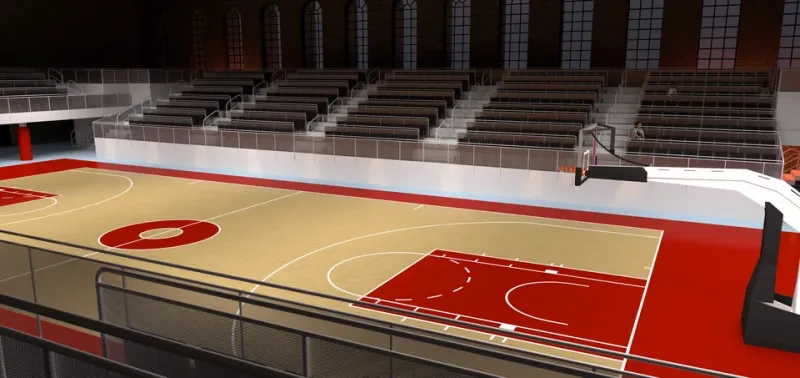
Photo: Wikideas1, CC0, via Wikimedia Commons
The 2026-27 college basketball season is a few weeks old, which means the board is packed, the tips come every fifteen minutes, and a whole lot of bettors are treating mid-November like the second weekend of March. It isn't. It's the least reliable stretch of the entire calendar, and the fact that it's also the most available stretch is exactly what makes it dangerous.
March Habits Don't Survive November
Here's the trap in one sentence: you learned how to bet college hoops in March, when you had thirty games of film on every team, and you're now applying those habits in November, when you have two.
The early schedule is built for television and for athletic departments' budgets, not for handicappers. Buy games. Neutral-site tournaments where nobody knows the rotations. Ranked teams beating up on opponents ranked 300-plus. It all looks like information. Most of it is noise wearing a stat line.
You're Handicapping Strangers
The transfer portal has turned every offseason into a roster reshuffle, and the 2026-27 version is no different. Programs are routinely turning over half their rotation. A team that returns two starters and adds three portal pieces is, functionally, a brand new team — one that has practiced together for a few months and played together for a couple of weeks.
Preseason rankings don't fix that. They're built on last season's résumé plus recruiting hype. Coaches are still auditioning lineups, testing small-ball configurations, and figuring out who can guard anybody. That's not a knock on the sport; it's just the reality of November, and it means the team you watched in February is a rumor now.
Buy Games Are Not Free Money
Every November, the same instinct shows up: hammer the power-conference team hosting a mid-major that's collecting a paycheck. Twenty-point spreads, mismatches everywhere, seems easy.
It isn't, for a few reasons.
- Motivation is uneven. The favorite wants to get out healthy. The underdog wants to cover a number that's already generous.
- Garbage time is the whole game. Backups and walk-ons close out the final eight minutes, and the pace, effort, and shot quality all change.
- Blowout variance is enormous. A 25-point lead can become a 14-point win in three minutes of live-ball turnovers.
- You're watching film on teams that haven't been tested. Efficiency numbers from a buy game tell you almost nothing about how a team performs against real opposition.
If you must play these spots, lean toward underdogs catching big numbers or pass entirely. Laying three touchdowns with a team that's still figuring out its rotation is not a strategy; it's a coin flip with extra juice.
Ratings Are Still Eating Last Season's Data
Public efficiency ratings blend preseason priors with current results, which means the first few weeks are partly last year's team wearing this year's jersey. Numbers start to stabilize somewhere around eight to ten games. Before that, you're betting against a model that's still catching up.
Use ratings as a starting point, not a verdict. If a line looks wildly off from the public number, the more likely explanation in November is that the rating is stale — not that you found free money.
Totals Might Be the Biggest Trap of All
Early-season totals are where casual bettors get hurt quietly. November games feature new officials' points of emphasis, foul-heavy first halves, teams pressing to create tempo they haven't practiced, and coaches still deciding whether they're a half-court team or a track meet.
The result is that pace data from buy games doesn't travel. A team that dropped 95 in an exhibition against a Division II opponent may play a 62-possession game the moment it faces a real defense. Overs look juicy. They're often just noise in a nice package.
A November Staking Framework
Nothing fancy — just guardrails that keep you solvent until the data arrives.
- Halve your normal unit. Early-season edges are thinner and less certain. So should your staking be.
- Cap your card at one or two plays per night. There's a game every fifteen minutes. That's a feature of the schedule, not an invitation.
- Skip teams you can't describe. If you can't name the rotation or the primary ball handler, you're not handicapping — you're guessing at a brand.
- Wait eight to ten games before trusting efficiency numbers. Until then, lean on roster continuity, coaching quality, and situational spots.
- Track closing line value, not just results. In a small November sample, wins and losses lie. CLV is the more honest signal.
What Feast Week Actually Demands
Thanksgiving tournaments — Maui, Atlantis, the Players Era events, all of it — are the most bettable part of November and also the most chaotic. Three games in four days means fatigue matters, motivation shifts based on where a team lands in the bracket, and a team that loses game one often plays a completely different rotation in the consolation game.
Wait for the bracket to settle before you fire. Check who's playing for third place and who'd rather be on the flight home. That's real information, and it's available before tip.
November Is a Scouting Trip, Not a Season
The bettors who win in February are usually the ones who stayed small and stayed curious in November. College hoops rewards patience more than any other market on the board, because the data you want — real rotations, real pace, real defensive identity — simply doesn't exist yet.
Protect the bankroll now. Then, when the calendar turns and the ratings have caught up, you'll be one of the few people at the window with both money and information.